
Let’s talk about education, resistance and Israel’s prisons
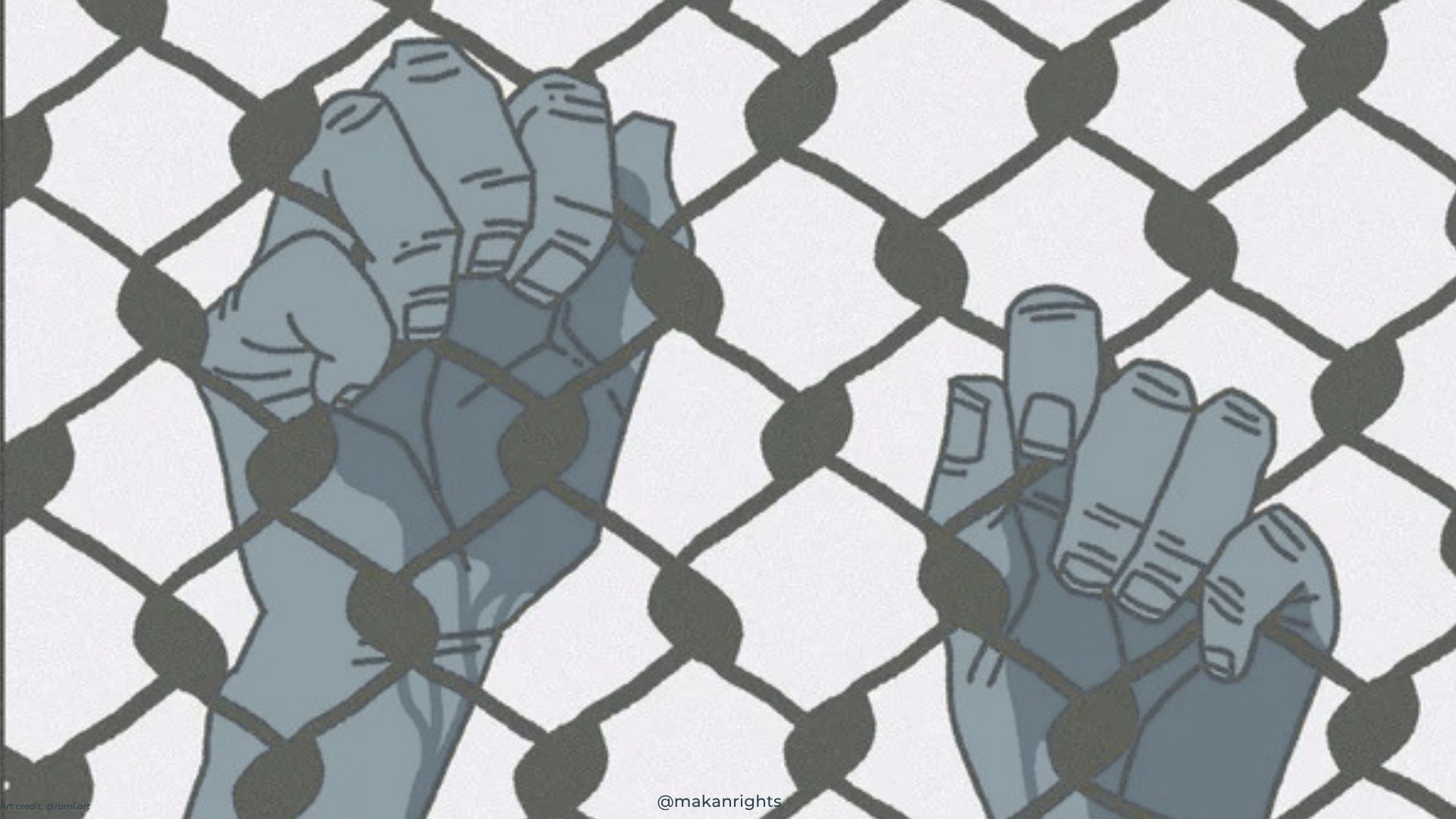
As Palestinian Prisoners Day approaches, and ahead of our virtual talk tomorrow, it is crucial to stand in solidarity with Palestinians imprisoned by Israel, who have long remained central to the Palestinian struggle, historically and today. Palestinian Prisoners Day is a call to recognise the centrality of imprisonment within Israel’s system of domination and to stand with those resisting it, inside and outside prison walls.
For decades, Israel has used imprisonment to try to fragment Palestinian society, criminalise resistance, and strip Palestinians of their freedom and dignity. Imprisonment strikes at the heart of how Zionism tries to wear down Palestinians as a people fighting for self-determination: through containment, discipline and punishment, and through the construction of a colonial carceral system designed to break collective life.
The freedom of Palestinians held by Israel has long been a rallying cry, and remains a key pillar of the Palestinian struggle. But it is also important to think about how Palestinians continue their struggles whilst still inside Israeli prisons.
One of the clearest ways is through education. Palestinian prisoners have historically had to fight for their right to education and their right to access educational materials. Hunger strikes were waged at different moments for the right to own even pens and paper. Prisoners struggled for access to books, for the right to study, and to be able to pursue knowledge.
And when formal education was restricted or stripped away, prisoners found other ways to learn together. They organised discussions, literacy sessions and educational workshops. They established libraries inside prisons. They obtained newspapers and magazines. Some prisoners took on the role of teachers, while others became librarians, passing through cells and prison sections with a record of the books each prisoner had, what they had read, and what they wanted to read next. Books in high demand were copied by hand to maximise collective access.
This history matters. Attacking education in prison is not simply about blocking access to books and materials, but preventing the formation of community and collective consciousness. Palestinian prisoners’ efforts to turn captivity into a site of learning are not separate from the wider struggle for liberation.
Since the escalation of the genocide in Gaza, prisons have become intensified sites of experimentation, humiliation and extermination. And yet, Palestinian prisoners have always been at the heart of resistance, while education, organising, and collective struggle inside prisons have long been part of the broader fight for liberation.
Tomorrow, we are hosting Genocide Inside & Outside of the Prison, a virtual talk with Lena Meari and Basil Farraj exploring Israel as a carceral state, how imprisonment functions within its settler colonial project, and the escalation of violence inside prisons, including gendered and sexual violence.
As Palestinian Prisoners’ Day approaches, building a clear political understanding of imprisonment is an essential part of education for Palestinian liberation. Join us tomorrow, and in the meantime explore our social media post on education in prison as a form of resistance, alongside our explainer on the history of Palestinian prisoners.
Explore
Palestine 101
Learn the basics
Related posts
Launching Educators for Liberation
Last week, we rolled out the first session of our Educators for Liberation Programme, a new branch of our work dedicated to building power and…
Genocide Inside and Outside the Prison: Watch our Recording
Last month, we hosted Genocide Inside and Outside the Prison, an online discussion with Lena Meari and Basil Farraj, marking Palestinian Prisoners Day and holding…
Let’s talk about education, resistance and Israel’s prisons
As Palestinian Prisoners Day approaches, and ahead of our virtual talk tomorrow, it is crucial to stand in solidarity with Palestinians imprisoned by Israel, who…